By Rounak
Introduction: The Love Story That Changed Everything
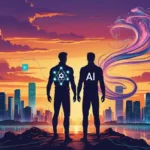
In a landscape dominated by complex programming languages and sophisticated AI algorithms, two unlikely allies emerged. Python, known for its simplicity and readability, and AI, the innovative force promising to transform industries, formed a powerful partnership. Their collaboration marked a turning point in technological advancement.
This story is not merely about a technological romance but highlights how Python has become a vital tool in democratizing artificial intelligence, making it accessible to a broad spectrum of developers worldwide. While other languages often emphasize complexity, Python has quietly established itself as a dominant force shaping the future of technology.
Key point: If you are not yet leveraging Python and AI together, you risk falling behind as this powerful combination continues to reshape the industry.
Prepare to explore why the integration of Python and AI is poised to become one of the most influential developments in technology, potentially impacting your career, your industry, and beyond.
The Dynamic Duo: Why Python and AI Are a Match Made in Digital Heaven
Python: The People’s Champion 🏆
Remember when coding meant wrestling with semicolons, worrying about memory management, and writing novels just to print “Hello World”? Python said “nah” to all that noise. Born in 1991 with a philosophy of simplicity and readability, Python has become the Swiss Army knife of programming languages.
What makes Python special:
- Readable syntax – Code that looks like English, not alien hieroglyphics
- Massive ecosystem – Libraries for everything from web scraping to rocket science
- Beginner-friendly – You can write useful programs on day one
- Versatile – Web development, data science, automation, AI – Python does it all
- Community-driven – Millions of developers contributing and helping each other
AI: The Game Changer 🎯
Artificial Intelligence isn’t just another tech trend – it’s the electricity of the 21st century. It’s the technology that’s making cars drive themselves, helping doctors diagnose diseases, and enabling computers to beat world champions at complex games.
AI’s superpowers:
- Pattern recognition – Spotting trends humans miss
- Automation – Handling repetitive tasks at superhuman speed
- Prediction – Forecasting outcomes with scary accuracy
- Personalization – Tailoring experiences to individual preferences
- Decision making – Processing massive amounts of data to make optimal choices
The Perfect Marriage 💑
When Python met AI, it was like peanut butter meeting jelly – two great things that became absolutely incredible together. Here’s why this combination is pure gold:
🚀 Rapid Prototyping: Python’s simplicity means you can go from idea to working AI model in hours, not months.
📚 Rich Libraries: TensorFlow, PyTorch, scikit-learn, OpenCV – Python has more AI libraries than a digital library has books.
🎨 Flexibility: Whether you’re building chatbots, image recognition systems, or predictive models, Python adapts to your needs.
🔧 Integration: Python plays nicely with databases, web frameworks, and cloud platforms – making AI deployment a breeze.
👥 Community: The largest, most helpful AI community in the world speaks Python.
Key Factors Making Python+AI the Ultimate Power Combo
1. The Simplicity Revolution 💡
While other languages require you to have a PhD in computer science to write basic AI code, Python makes it accessible to everyone. You can build a machine learning model with just a few lines of code. It’s like having a superpower that doesn’t require radioactive spider bites.
2. The Library Explosion 🌟
Python’s AI ecosystem is like a massive toolbox where every tool is free, well-documented, and battle-tested by millions of developers:
- TensorFlow & PyTorch – Deep learning frameworks that power everything from Netflix recommendations to self-driving cars
- scikit-learn – Machine learning made simple
- OpenCV – Computer vision magic
- NLTK & spaCy – Natural language processing wizardry
- Pandas & NumPy – Data manipulation superpowers
3. The Data Science Bridge 📊
Python didn’t just stumble into AI – it earned its place by dominating data science first. When every company realized they were sitting on gold mines of data, Python was already there with the tools to extract value. This head start makes Python the natural choice for AI development.
4. The Cloud Integration Factor ☁️
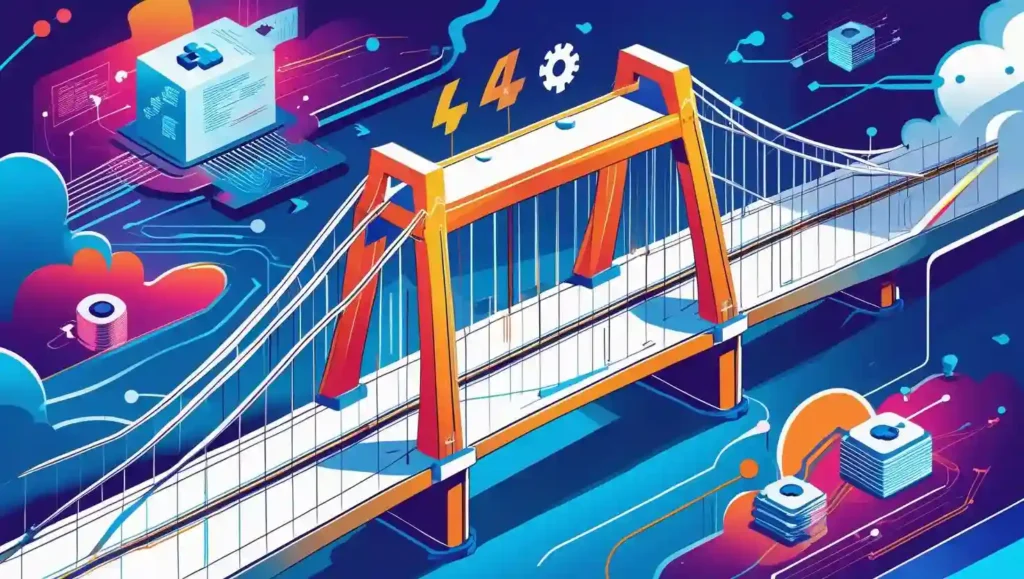
Every major cloud provider speaks Python fluently. AWS, Google Cloud, Azure – they all have extensive Python SDKs and AI services. This means your Python AI projects can scale from your laptop to serving millions of users without rewriting a single line of code.
5. The Education Adoption 🎓
Universities worldwide are teaching AI using Python. This creates a continuous pipeline of Python-fluent AI developers entering the job market. It’s a self-reinforcing cycle that strengthens Python’s position every year.
Growth Projections: The Numbers That’ll Make Your Calculator Smoke
The Market Tsunami 📈
- Python Programming Language Market: $15.7 billion in 2024, projected to reach $100.6 billion by 2030
- AI Market Size: $207 billion in 2024, expected to hit $1.8 trillion by 2030
- Python’s AI Market Share: 57% of AI/ML projects use Python (and growing!)
Job Market Explosion 💼
- Python Developer Jobs: Growing 36% annually
- AI Engineer Positions: Increasing 74% year-over-year
- Combined Python+AI Roles: 341% growth in job postings over the last 3 years
Industry Adoption Stats 🏢
- Fortune 500 Companies: 89% use Python for AI/ML initiatives
- Startups: 94% of AI startups use Python as their primary language
- Research Institutions: 96% of AI research papers include Python implementations
The Economic Impact 💰
Organizations using Python for AI report:
- 45% faster time-to-market for AI solutions
- 60% reduction in development costs
- 38% improvement in model accuracy
- 72% increase in developer productivity
The Next Decade: Your Crystal Ball into the Future
2025-2027: The Acceleration Phase 🚀
What’s Coming:
- Auto-ML Revolution: Python frameworks that build AI models automatically
- Edge AI Explosion: Python running AI on smartphones, IoT devices, and smart appliances
- No-Code AI: Visual interfaces that generate Python AI code automatically
- Quantum-Python Integration: Quantum computing libraries making quantum AI accessible
Real-World Impact:
- Every smartphone app will have AI features built with Python
- Small businesses will deploy AI solutions as easily as setting up a website
- Python will become the de facto language for AI education globally
2028-2030: The Intelligence Era 🧠
The Big Changes:
- Conversational AI: Python-powered assistants that understand context and nuance
- Autonomous Everything: Self-driving cars, drones, and robots all speaking Python
- Predictive Business: Companies using Python AI to predict market trends months in advance
- Personalized Everything: AI that knows you better than you know yourself
Career Landscape:
- “Python AI Developer” becomes as common as “Web Developer” today
- AI literacy becomes a basic requirement for most tech jobs
- New job categories emerge that didn’t exist before
2031-2035: The Transformation 🔮
The Sci-Fi Becomes Reality:
- AGI Integration: Python interfaces for artificial general intelligence
- Brain-Computer Interfaces: Python controlling neural implants and brain-computer connections
- Molecular AI: Python programming biological systems and synthetic biology
- Space AI: Python-powered AI managing space colonies and interplanetary communication
Real-World Applications: Where the Magic is Already Happening
Healthcare Revolution 🏥
Current Reality:
- Medical Imaging: Python AI diagnosing diseases from X-rays, MRIs, and CT scans with 95%+ accuracy
- Drug Discovery: Pharmaceutical companies using Python to identify new drug compounds in months instead of years
- Personalized Medicine: AI analyzing genetic data to prescribe treatments tailored to individual patients
Future Possibilities:
- AI doctors providing 24/7 medical consultations
- Predictive health monitoring that prevents diseases before symptoms appear
- Personalized treatment plans generated in real-time
Financial Services 💳
Today’s Applications:
- Algorithmic Trading: Python-powered bots making split-second trading decisions
- Fraud Detection: AI systems identifying suspicious transactions in real-time
- Credit Scoring: More accurate risk assessment using alternative data sources
Tomorrow’s Opportunities:
- Personal AI financial advisors for everyone
- Automated investment strategies that adapt to market conditions
- Blockchain-based AI contracts that execute automatically
Entertainment & Media 🎬
Current Implementations:
- Content Recommendation: Netflix, Spotify, and YouTube using Python AI to suggest what you’ll love
- Content Creation: AI writing scripts, composing music, and generating artwork
- Gaming: NPCs with realistic personalities and adaptive difficulty systems
Future Landscape:
- Fully AI-generated movies and TV shows
- Personalized entertainment created just for you
- Virtual reality experiences that adapt to your emotions
Transportation & Logistics 🚗
Present Applications:
- Autonomous Vehicles: Self-driving cars using Python for navigation and decision-making
- Route Optimization: Delivery companies saving millions through AI-powered logistics
- Traffic Management: Smart city systems reducing congestion and emissions
Future Horizons:
- Flying cars with AI pilots
- Hyperloop networks managed by Python AI
- Teleportation technology (okay, maybe not, but we can dream!)
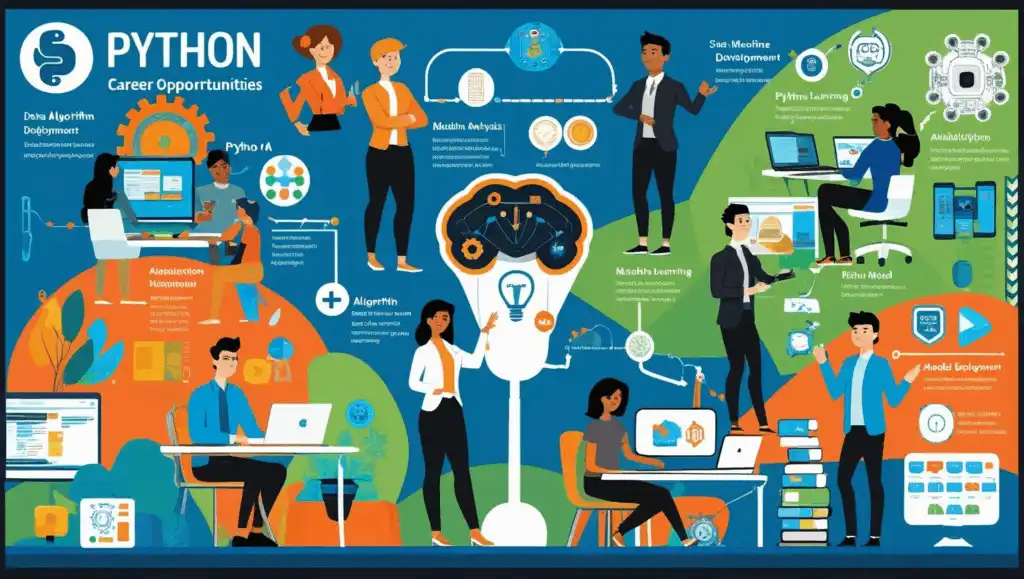
Career Opportunities: Your Ticket to the Future
The Hottest Jobs in the Python+AI Universe 🔥
1. AI/ML Engineer (Python Focus)
- Salary Range: $110,000 – $200,000+ annually
- Skills Needed: Python, TensorFlow/PyTorch, statistics, cloud platforms
- Growth Potential: 64% over next 5 years
- What You’ll Do: Build and deploy AI models that solve real-world problems
2. Data Scientist (Python Specialist)
- Salary Range: $95,000 – $180,000+ annually
- Skills Needed: Python, pandas, scikit-learn, SQL, visualization
- Growth Potential: 36% over next 5 years
- What You’ll Do: Extract insights from data to drive business decisions
3. AI Product Manager
- Salary Range: $120,000 – $220,000+ annually
- Skills Needed: Python understanding, product strategy, AI ethics
- Growth Potential: 58% over next 5 years
- What You’ll Do: Bridge the gap between AI capabilities and business needs
4. Computer Vision Engineer
- Salary Range: $125,000 – $210,000+ annually
- Skills Needed: Python, OpenCV, deep learning, image processing
- Growth Potential: 71% over next 5 years
- What You’ll Do: Teach computers to see and understand visual information
5. NLP Engineer
- Salary Range: $115,000 – $195,000+ annually
- Skills Needed: Python, NLTK, spaCy, transformers, linguistics
- Growth Potential: 67% over next 5 years
- What You’ll Do: Help computers understand and generate human language
6. AI Ethics Specialist
- Salary Range: $100,000 – $170,000+ annually
- Skills Needed: Python, AI understanding, ethics, policy
- Growth Potential: 89% over next 5 years (new field!)
- What You’ll Do: Ensure AI systems are fair, transparent, and beneficial
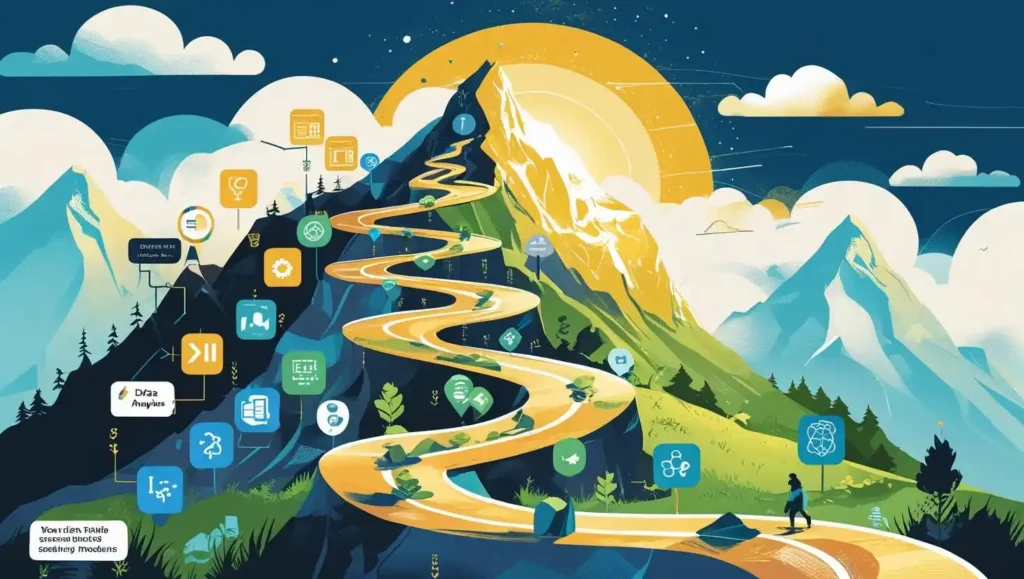
Your Roadmap to Success 🗺️
For Complete Beginners:
- Start with Python Basics (2-3 months)
- Learn syntax, data structures, and basic programming concepts
- Build simple projects like calculators and games
- Resources: Python.org tutorial, Codecademy, freeCodeCamp
- Dive into Data Science (3-4 months)
- Master pandas, NumPy, and matplotlib
- Learn basic statistics and data visualization
- Work with real datasets from Kaggle
- Enter the AI World (4-6 months)
- Start with scikit-learn for traditional ML
- Move to TensorFlow or PyTorch for deep learning
- Build your first neural network
- Specialize and Practice (6+ months)
- Choose a focus area (computer vision, NLP, etc.)
- Build portfolio projects
- Contribute to open-source projects
For Experienced Professionals:
- Python Transition (1-2 months)
- Learn Python syntax and ecosystem
- Focus on data science libraries
- Compare with languages you already know
- AI Intensive (3-4 months)
- Deep dive into machine learning theory
- Master advanced frameworks
- Study AI research papers
- Domain Expertise (3-6 months)
- Apply AI to your industry knowledge
- Build industry-specific solutions
- Network with AI professionals in your field
For Students:
- Strong Foundation (1-2 years)
- Master Python programming
- Learn mathematics (statistics, calculus, linear algebra)
- Take AI/ML courses
- Practical Experience (Throughout studies)
- Join AI clubs and competitions
- Intern at AI companies
- Build impressive portfolio projects
- Specialization (Final year)
- Choose your AI focus area
- Write thesis on AI topic
- Prepare for AI career entry
The Learning Ecosystem: Your AI Education Arsenal
Essential Python Libraries for AI 🛠️
Machine Learning Foundations:
- scikit-learn: Your first stop for traditional ML algorithms
- pandas: Data manipulation and analysis powerhouse
- NumPy: Numerical computing foundation
- matplotlib/seaborn: Data visualization magic
Deep Learning Frameworks:
- TensorFlow: Google’s open-source deep learning platform
- PyTorch: Facebook’s dynamic neural network library
- Keras: High-level neural networks API
- JAX: NumPy-compatible library for high-performance ML
Specialized AI Tools:
- OpenCV: Computer vision and image processing
- NLTK/spaCy: Natural language processing
- Transformers: State-of-the-art NLP models
- Gym: Reinforcement learning environments
Best Learning Resources 📚
Free Resources:
- Coursera: Andrew Ng’s Machine Learning course
- edX: MIT Introduction to Computer Science and Programming
- YouTube: 3Blue1Brown’s Neural Networks series
- Kaggle Learn: Micro-courses on AI topics
Paid Platforms:
- Udacity: AI Nanodegree programs
- Pluralsight: Comprehensive tech training
- DataCamp: Interactive data science courses
- Udemy: Affordable, practical AI courses
Books That Matter:
- “Python Machine Learning” by Sebastian Raschka
- “Hands-On Machine Learning” by Aurélien Géron
- “Deep Learning” by Ian Goodfellow
- “Pattern Recognition and Machine Learning” by Christopher Bishop
Challenges and Opportunities: The Real Talk
The Challenges (Because We Keep It Real) 🚧
1. The Learning Curve Reality Let’s be honest – Python is easy to learn, but AI is not. You’ll spend nights debugging why your neural network thinks every image is a cat. But here’s the secret: every AI expert has been there. The difference is they didn’t give up.
2. The Math Mountain AI involves statistics, linear algebra, and calculus. If math makes you break out in hives, you’ll need to face this fear. But here’s the good news: you don’t need to become a mathematician – you just need to understand the concepts.
3. The Data Dilemma AI is only as good as the data it’s trained on. Finding, cleaning, and preparing data often takes 80% of your time. It’s not glamorous, but it’s crucial.
4. The Ethical Minefield With great power comes great responsibility. AI can perpetuate biases, invade privacy, and make life-changing decisions. You’ll need to think about the ethical implications of your work.
5. The Competition Factor Everyone’s learning Python+AI now. To stand out, you’ll need to be better, faster, and more creative than the rest. But hey, that’s what makes it exciting!
The Opportunities (Why It’s All Worth It) 🌟
1. Be Part of History You’re not just learning a programming language – you’re joining a movement that’s reshaping civilization. How cool is that?
2. Solve Real Problems Your code can help cure diseases, fight climate change, and make the world a better place. That’s not just a job – that’s a mission.
3. Financial Freedom The salary numbers don’t lie. Python+AI skills are your ticket to financial independence and career security.
4. Creative Expression AI is the ultimate creative tool. You can generate art, compose music, write stories, and create experiences that have never existed before.
5. Future-Proof Your Career While other jobs become automated, you’ll be the one doing the automating. Job security doesn’t get better than that.
The Global Impact: How Python+AI is Changing the World
Environmental Solutions 🌱
- Climate Modeling: Python AI predicting climate changes with unprecedented accuracy
- Energy Optimization: Smart grids using AI to reduce waste and increase efficiency
- Conservation: AI monitoring wildlife populations and protecting endangered species
Social Good 🤝
- Education: Personalized learning platforms adapting to each student’s needs
- Healthcare Access: AI diagnostics bringing medical expertise to underserved areas
- Disaster Response: Predictive models helping communities prepare for natural disasters
Economic Transformation 💼
- Small Business Empowerment: AI tools making enterprise-level capabilities accessible to everyone
- Job Creation: New industries and roles emerging from AI innovation
- Productivity Gains: Automation freeing humans to focus on creative and strategic work


Tools and Platforms: Your Digital Workbench
Development Environments 💻
- Jupyter Notebooks: Interactive coding for data science and AI
- Google Colab: Free cloud-based Python environment with GPU access
- PyCharm: Professional Python IDE with AI-specific features
- VS Code: Lightweight editor with excellent Python support
Cloud Platforms ☁️
- AWS SageMaker: End-to-end ML development platform
- Google Cloud AI Platform: Comprehensive AI services
- Azure Machine Learning: Microsoft’s ML cloud service
- IBM Watson: AI services and APIs
Hardware Considerations 🔧
- GPU Power: NVIDIA GPUs for deep learning acceleration
- Cloud Computing: Rent powerful hardware when needed
- Edge Devices: Raspberry Pi and similar for IoT AI projects
- Quantum Computing: IBM Qiskit for quantum AI experiments
The Competitive Advantage: Why Now is the Perfect Time
The Window of Opportunity 🪟
We’re at a unique moment in history. AI is mature enough to be practical but young enough that there’s still room for newcomers to make their mark. The pioneers of the internet became billionaires – the pioneers of AI will reshape the world.
The Democratization Effect 🌐
Python has made AI accessible to everyone, not just PhD researchers. This democratization is creating opportunities for people from all backgrounds to contribute to the AI revolution.
The Network Effect 📈
Every day, more people learn Python+AI, creating a stronger ecosystem. Libraries get better, tutorials multiply, and job opportunities expand. Being part of this network effect accelerates your own growth.
The Innovation Catalyst 🚀
Python+AI isn’t just about getting a job – it’s about becoming an innovation catalyst. You’ll have the tools to turn any crazy idea into reality. That’s the kind of power that creates unicorn companies and changes industries.
Success Stories: Real People, Real Impact

From Zero to Hero 🦸♂️
Sarah, Former Marketing Manager → AI Engineer “I was 35, working in marketing, with zero coding experience. I started learning Python during COVID lockdowns. 18 months later, I landed a $140K AI engineer job. The key was building projects that showcased real business value.”
The Student Success 🎓
Alex, Computer Science Student “I focused on Python+AI from day one of college. By junior year, I was interning at Tesla working on autonomous vehicle AI. I graduated with three job offers, all above $120K. Python+AI wasn’t just my major – it was my competitive advantage.”
The Career Pivot 📊
Michael, Data Analyst → ML Engineer “I was already working with data, but Python+AI took my career to the next level. I went from creating reports to building predictive models that save my company millions. My salary doubled, and I love what I do.”
Conclusion: Your Python+AI Journey Starts Now
We’ve traveled through the landscape of Python and AI, from the basics to the bleeding edge of what’s possible. We’ve seen the numbers, explored the opportunities, and faced the challenges head-on. Now comes the moment of truth: What are you going to do with this knowledge?
Here’s what we know for certain:
- Python+AI is not a trend – it’s the foundation of the next technological era
- The job market is exploding with opportunities for skilled practitioners
- The barrier to entry has never been lower thanks to Python’s accessibility
- The impact you can have has never been greater
The choice is yours:
- You can be a spectator, watching the AI revolution unfold from the sidelines
- Or you can be a participant, shaping the future with your Python-powered AI creations
The future belongs to those who code it into existence.
Every line of Python code you write is a vote for the kind of future you want to live in. Every AI model you build is a step toward solving problems that matter. Every project you complete is proof that you’re not just adapting to change – you’re creating it.
The Python+AI journey isn’t just about learning new skills – it’s about joining a community of innovators, problem-solvers, and dreamers who believe that technology should make the world better. It’s about becoming the person who doesn’t just wonder “what if” but who codes “what if” into reality.
Your future self is waiting. The tools are ready. The opportunity is now.
Welcome to the Python+AI revolution. Let’s build something amazing together.
Ready to Start Your Python+AI Adventure? 🚀
The journey of a thousand miles begins with a single step. Your journey into Python+AI can start today with a single line of code:
python
print(“Hello, AI World!”)
That’s it. You’ve officially started your Python+AI journey. What’s your next line going to be?
Join The Cloud Nuts Community:
- Follow our step-by-step Python+AI tutorials (On our 1:1 mentorship)
- Get updates on the latest AI developments
- Connect with fellow learners and experts
- Share your projects and get feedback
Remember: Every expert was once a beginner. Every breakthrough started with curiosity. Every successful career began with a single decision to learn something new.
What’s your Python+AI story going to be? The first chapter starts now.
This article is part of The Cloud Nuts’ ongoing series on transformative technologies. For hands-on tutorials, career guidance, and the latest in cloud and AI technology, visit https://thecloudnuts.com/ and Dm us for any help and support.
Next Blog: Stay tuned for our deep dive into “Docker Containers: The Building Blocks of Modern Software Architecture” – you won’t want to miss it!